 24X7
24X7
Vitamin D foods matter because your body needs vitamin D to absorb calcium, maintain bone strength and support normal immune function. Anyone following a vegetarian diet in India may need to pay closer attention, since only a few natural vegetarian foods contain meaningful vitamin D. Fortified foods, sun-exposed mushrooms, dairy foods and doctor-guided supplementation often play a practical role. This guide gives a vegetarian vitamin D rich foods list, explains how to read fortified-food labels and helps decide when food alone may not be enough.
Key Takeaways
Use these points as a quick guide before planning a diet or discussing vitamin D with a doctor.
Food choices are limited. Vegetarian diets often rely on fortified foods and mushrooms.
Labels matter. A food helps only if the label confirms vitamin D fortification.
Bones need balance. Vitamin D works with calcium, protein, magnesium and movement.
Sunlight still matters. Skin makes vitamin D when safe sun exposure is possible.
Testing may be needed. Blood tests guide treatment if deficiency symptoms or risk factors exist.
Supplements need medical advice. High-dose vitamin D without guidance can cause harm.
Why Does Vitamin D Matter for Bones and Immunity?
Vitamin D helps the body absorb calcium and phosphorus, two minerals involved in bone formation and muscle function. When vitamin D levels stay low, bones may struggle to stay strong even when the diet includes calcium-rich foods such as milk, curd, paneer and leafy greens.
For children, long-term deficiency can affect bone growth. For adults, low vitamin D may contribute to bone pain, muscle weakness, a higher tendency to fall and poor bone mineral health. A doctor may check vitamin D along with calcium, phosphorus, alkaline phosphatase or bone-density tests if symptoms or risk factors suggest a deficiency.
Vitamin D also supports immune regulation. That does not mean vitamin D foods prevent infections or replace medical care. It means adequate levels help the immune system work normally, which is one reason doctors often correct deficiency when blood tests confirm it.
Once the role of vitamin D is clear, the next step is understanding why vegetarian diets need a more planned approach.
Why Do Vegetarian Diets Need Planned Vitamin D Sources?
Most foods high in vitamin D come from animal sources such as fatty fish, fish liver oil and some seafood. Vegetarian diets usually exclude these foods, so the practical options narrow to fortified foods, dairy products, mushrooms exposed to ultraviolet light and eggs for people who eat them.
A second issue is the difference between natural and fortified sources. Natural vitamin D foods in a vegetarian diet are few. Manufacturers add vitamin D to some foods, such as milk, plant-based drinks, cereals and spreads, to help people get more from everyday meals. These fortified foods can support intake, but only when the nutrition label clearly lists vitamin D.
Labels may also show vitamin D2 and vitamin D3. Mushrooms and some vegan-fortified foods usually contain vitamin D2. Many fortified dairy products use vitamin D3, often derived from lanolin from sheep's wool, which many vegetarians accept but vegans may avoid. For a strict vegan diet, checking whether the label mentions vegan vitamin D3 from lichen or vitamin D2 matters.
This matters because the best foods for vitamin D are the ones eaten regularly with a verifiable label, not the ones that sound healthy but contain little vitamin D.
Vitamin D Foods: Top 15 Vegetarian Options
The following list focuses on vegetarian vitamin D sources commonly found in Indian homes, supermarkets or diet plans. Amounts vary by brand, fortification level, cooking method and serving size, so use this list to choose foods and use labels to estimate intake.
No. | Vegetarian Vitamin D Food | How It Helps | How to Use It Practically |
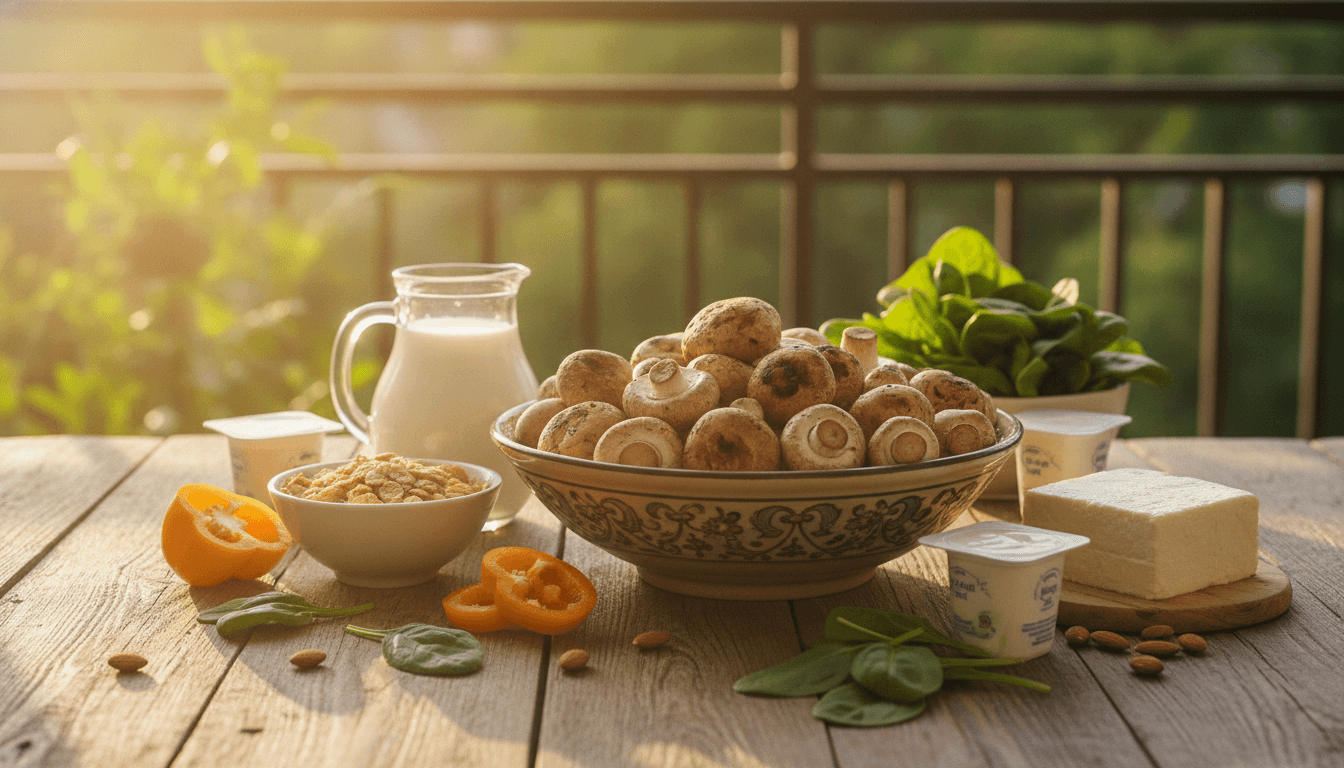
1 | UV-exposed mushrooms | Mushrooms exposed to ultraviolet light can contain vitamin D2, making them one of the few natural vegetarian sources. | Sauté with a little oil, add to soups or mix into pulao, omelettes or wraps. |
2 | Sun-dried mushrooms | Drying mushrooms in sunlight may raise vitamin D content when the mushrooms get enough sun exposure. | Add rehydrated mushrooms to curries, pasta, stir-fries or clear soups. |
3 | Fortified cow's milk | Fortified milk can add vitamin D to a food many Indian families already use daily. | Check the packet for vitamin D, and pair milk with breakfast or an evening snack. |
4 | Fortified toned or double-toned milk | Fortified low-fat milk helps people who prefer lighter milk while still adding vitamin D. | Use in tea, porridge, smoothies or plain milk if the label confirms fortification. |
5 | Fortified curd | Curd gives calcium and protein, and fortified curd adds vitamin D when the brand includes it. | Eat with meals, raita or smoothies, especially when a calcium-rich option is needed. |
6 | Fortified yoghurt | Fortified yoghurt can support vitamin D intake and gives a convenient snack option. | Choose unsweetened or lower-sugar varieties where possible, and check the nutrition panel. |
7 | Fortified paneer | Paneer offers protein and calcium, and some packaged versions may include added vitamin D. | Use moderate portions in meals, especially when protein alongside bone-supporting nutrients is needed. |
8 | Fortified cheese | Some cheese products contain added vitamin D, though salt and fat content vary. | Use small amounts in sandwiches, rolls or salads, and check both vitamin D and sodium content. |
9 | Fortified breakfast cereal | Cereal can add vitamin D when the label lists fortification, which helps if breakfast is the most consistent meal. | Pair with fortified milk or fortified plant milk for a stronger vitamin D breakfast. |
10 | Fortified oats | Some packaged oats or instant oat mixes include vitamin D, though plain oats usually do not. | Read the label, and prepare with fortified milk for more bone-supporting nutrients. |
11 | Fortified soy milk | Fortified soy milk suits people who avoid dairy and need a drink with added vitamin D. | Choose calcium-fortified soy milk when possible, since calcium and vitamin D work together. |
12 | Fortified almond milk | Fortified almond milk can support vitamin D intake for dairy-free diets, though protein content is usually lower than soy milk. | Use in smoothies, cereal or coffee, and check for added calcium and vitamin D. |
13 | Fortified orange juice | Some packaged juices add vitamin D, though sugar content needs attention. | Use small servings if suitable for the diet, and avoid where sugar is restricted. |
14 | Egg yolk | Egg yolk contains vitamin D and suits ovo-vegetarians, but it is not suitable for strict vegetarian or vegan diets. | For those who eat eggs, boiled eggs, omelettes or egg bhurji work well as part of a balanced meal. |
15 | Fortified nutritional yeast | Some nutritional yeast products include vitamin D, though many contain only B vitamins. | Sprinkle on soups, pasta or roasted vegetables only after checking the label. |
This table gives options, but the real value comes from building these foods into meals in a way that supports overall bone health.
How Can You Build a Day's Diet Around Vitamin D Rich Foods?
A useful vitamin D diet plan does not depend on one food. Better nutritional support comes from combining vitamin D rich foods with calcium, protein and regular movement, because bones respond to the full pattern of care.
For breakfast, fortified milk with fortified cereal or oats is a solid option. For a dairy-free approach, fortified soy milk may work better than almond milk when protein is also a priority. For those who eat eggs, an omelette with mushrooms gives two vegetarian vitamin D sources in one meal.
For lunch, curd or fortified yoghurt can add calcium and, when fortified, vitamin D. A mushroom sabzi, paneer dish or dal with curd keeps the meal familiar while adding nutrients that support bones and muscles.
For dinner, mushrooms can fit into soup, millet khichdi, vegetable pulao or stir-fried vegetables. When a packaged food claims vitamin D fortification, checking the label is more reliable than relying on front-of-pack wording alone.
A simple vegetarian pattern might look like this:
Breakfast: Fortified milk or fortified soy milk with cereal or oats.
Lunch: Dal, vegetables and fortified curd or yoghurt.
Snack: Fortified milk, yoghurt or a small fortified cereal portion.
Dinner: Mushrooms with roti, rice, khichdi or soup.
This approach helps because it spreads intake across the day instead of placing all hope on one food that may not be eaten consistently.
How Do You Read Labels for Vitamin D Fortification?
Food labels help separate true vitamin D rich foods from products that only sound healthy. Vitamin D should appear in the nutrition table or ingredient list, and serving size is worth checking before comparing products.
Labels may list vitamin D in international units, micrograms or as a percentage of daily value. Serving size matters because a cereal or drink may show vitamin D for a smaller portion than what's actually eaten, or for a portion larger than what's normally used.
A quick label check for comparing foods:
Label Detail | What to Check | Why It Matters |
Vitamin D listed | Look for vitamin D2, vitamin D3 or cholecalciferol. | A product without listed vitamin D may not support intake. |
Serving size | Compare the listed portion with the real portion consumed. | This helps avoid overestimating how much vitamin D is obtained. |
Calcium content | Check whether the product also adds calcium. | Vitamin D and calcium together support bone health. |
Sugar and salt | Review added sugar in drinks and sodium in cheese or spreads. | A fortified food still needs to fit overall health needs. |
Vegetarian or vegan source | Check the source for animal-derived ingredients. | This helps match foods to diet preferences. |
Label reading becomes especially useful when choosing foods for children, older adults, pregnant women, people with diabetes or anyone with kidney, liver or gut health concerns. In these situations, a doctor or dietitian can help identify safe options for specific medical needs.
Are Natural Vitamin D Foods Enough Without Sunlight or Supplements?
Natural vitamin D foods alone often do not correct a confirmed deficiency, especially with low sun exposure, darker skin tone, covered clothing, older age, obesity, gut absorption problems, kidney disease or medicines that affect vitamin D metabolism. Food helps, but blood levels may need medical assessment.
Skin makes vitamin D when exposed to sunlight. The amount varies with season, time of day, skin tone, clothing, sunscreen use, air pollution and how much skin gets exposed. Safe sun exposure may help some people, but sunburn and heat-related illness are real risks, especially in Indian summers.
Supplements can help when a doctor confirms deficiency or when risk factors make dietary intake insufficient. The dose and duration need medical advice because too much vitamin D can raise calcium levels and may harm the kidneys, heart rhythm or digestion.
Food, sunlight and supplements work best as a plan guided by health status, rather than as isolated fixes.
When Should You See a Doctor for Possible Vitamin D Deficiency?
A medical review is worth considering when symptoms, risk factors or repeated low blood-test results suggest low vitamin D. A doctor can decide whether a vitamin D test, calcium tests, bone-health assessment or treatment for another condition with similar symptoms is needed.
A consultation is worth considering where any of these apply:
Bone pain or muscle weakness: These symptoms may relate to vitamin D, but other causes need assessment.
Frequent falls or poor balance: A doctor can check muscle strength, medicines and bone health.
Low-trauma fracture: A fracture after a minor fall may need bone-density evaluation.
Long-term digestive disease: Gut conditions can reduce nutrient absorption.
Kidney or liver disease: These organs help process vitamin D, so treatment needs care.
Pregnancy, lactation or older age: Nutritional needs may change and need personalised advice.
Long-term medicines: Steroids, anti-seizure medicines and some other drugs can affect vitamin D.
Urgent medical care is needed when weakness is sudden, severe or comes with chest pain, fainting, confusion, severe dehydration or symptoms of stroke. These signs may not relate to vitamin D, but they need prompt assessment.
A consultation also helps for anyone already taking supplements who wants to confirm the dose remains safe.
Seeking Care at Healing Hospital
Advice about low vitamin D, bone pain, recurrent fractures, weakness or diet-related concerns is available at Healing Hospital in Sector 34A, Chandigarh, which can help identify the right next step. Our consultants can review symptoms, medical history, medicines and test results before advising diet changes, supplements or further evaluation.
NABH-accredited multispeciality hospital in Chandigarh. This matters because care is delivered through defined hospital quality and safety processes while staying close to specialist support in the Tricity area.
100+ beds, 50+ senior consultants and 25+ specialities. These services help when vitamin D concerns overlap with orthopaedics, internal medicine, nephrology, gastroenterology or other health issues.
24x7 emergency care. Sudden or severe symptoms can be assessed through emergency support without waiting for a routine OPD visit.
An appointment with Healing Hospital is worth booking where a doctor has advised vitamin D testing, where persistent bone or muscle symptoms are present, or for safe guidance before starting supplements.
Frequently Asked Questions
1. Which vegetarian foods are highest in vitamin D?
UV-exposed mushrooms and fortified foods are among the most useful vegetarian vitamin D sources. Fortified milk, fortified curd, fortified cereal, fortified soy milk and egg yolk for ovo-vegetarians can all help when labels confirm vitamin D content.
2. Are mushrooms a good source of vitamin D?
Mushrooms can be a good source when they receive ultraviolet light or enough sun exposure. Regular mushrooms grown without UV exposure may contain much less vitamin D, so the source and label matter.
3. Can milk and curd give enough vitamin D?
Milk and curd help more when manufacturers fortify them with vitamin D. They also give calcium and protein, which support bone health, but confirmed deficiency may still need doctor-guided supplements.
4. What are the best vitamin D foods for bones?
The best vitamin D foods for bones are the ones that pair vitamin D with calcium and protein, such as fortified milk, fortified curd, fortified yoghurt, fortified soy milk and mushrooms eaten with balanced meals. Bone health also depends on exercise, hormone status, medicines and overall nutrition.
5. Do vegetarians need vitamin D supplements?
Some vegetarians may need supplements if blood tests show deficiency or if sunlight and food intake are low. A doctor should guide dose and duration because high-dose vitamin D without monitoring can cause side effects.
6. How do I know if a food is vitamin D fortified?
Check the nutrition table or ingredient list for vitamin D, vitamin D2, vitamin D3 or cholecalciferol. Front-label health claims are less useful than the actual nutrient amount per serving.